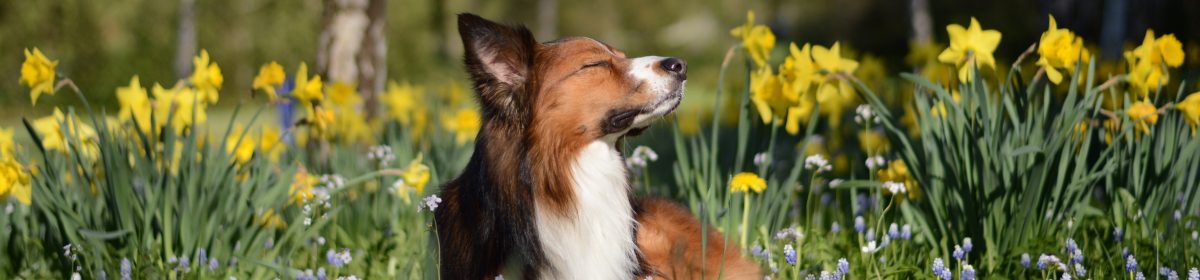
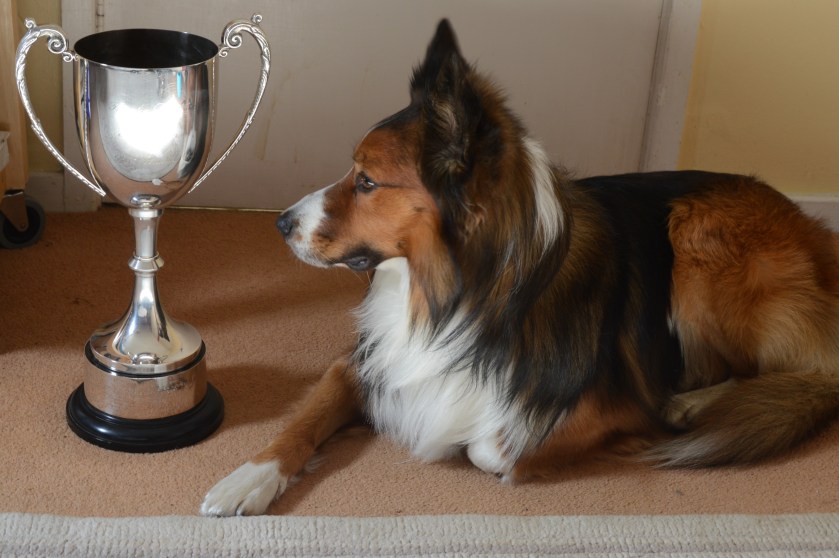
After a good night’s sleep, Aramis and I had another photo session with the cup.
Jackie put some sheep in the pen for Mac, the Boxer from Derby, who had come up to Yorkshire to do some herding. Now Boxers may not be the most likely breed for a herding job, but if you think of their origin, it is not so far-fetched. Boxers were used as drovers, i.e. to move cattle from one pen to the next. They would not cover long distances driving cattle, but were helping to move them to the butcher’s, for example, and kept their owners safe when the animals became unruly.
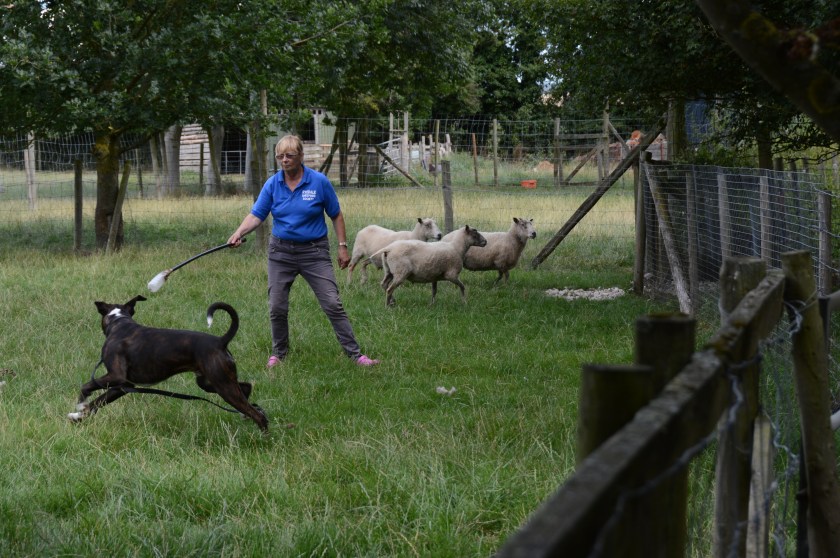
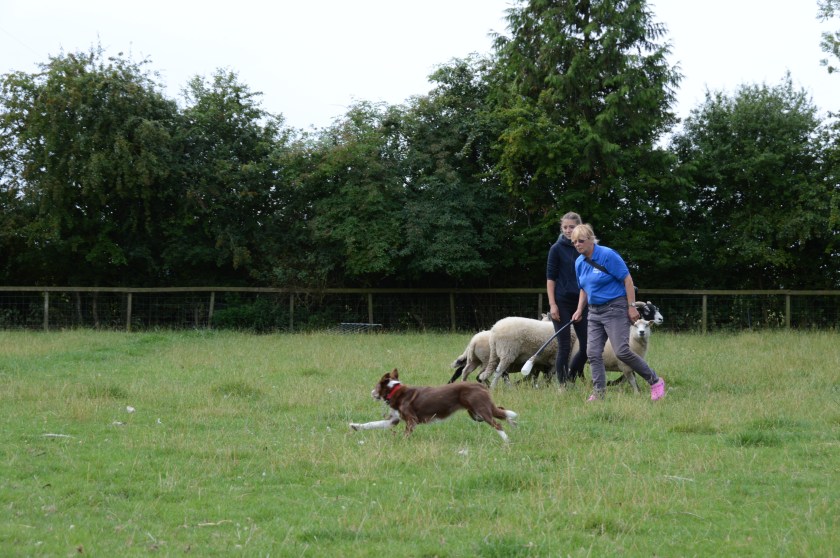
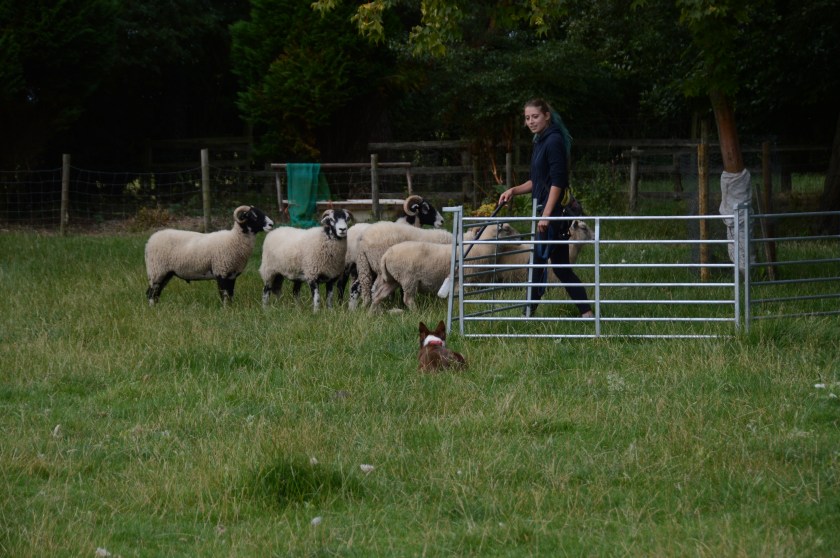
Mac had only seen sheep once prior to this session. Jackie started out working him in a pen, where she had more control over him. For starting a new dog, you need some calm, experienced sheep who won’t panic and are very familiar with the proceedings. The three sheep in the background are Jackie’s ‘starter sheep’. Their reward for being chased about by inexperienced dogs is that they are allowed to live up to a ripe old age. Good, well-trained starter sheep are hard to find.
In the picture above, Jackie is holding a stick with a rattle bottle at the end. It is used to stop young or inexperienced dogs in their tracks if they get overexcited or refuse to listen. The dogs are never touched with the bottle, of course. It is only used for rattling.
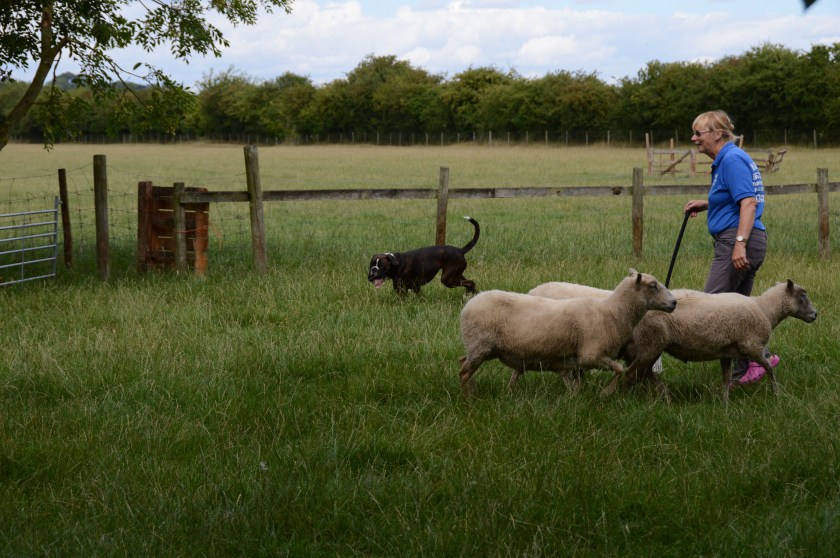
It was great watching Mac starting to learn how to move the sheep without getting too close to them. He was very keen indeed.
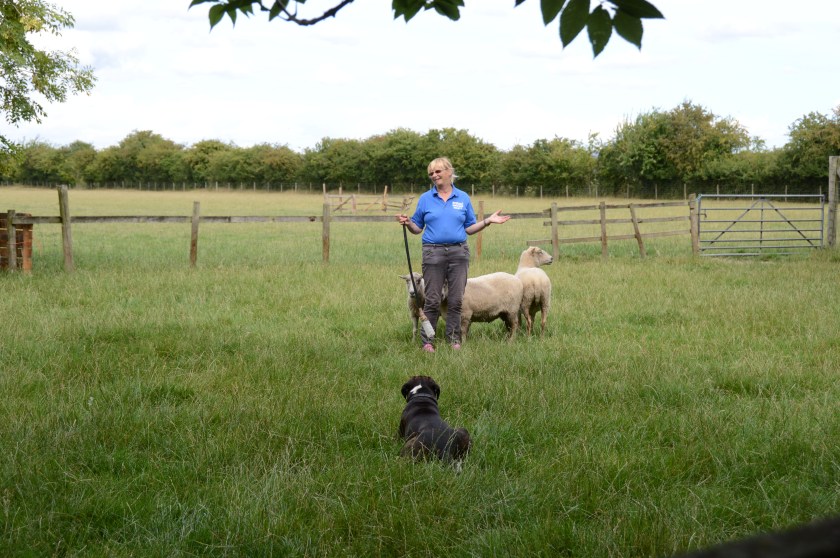
As inexperienced dogs are usually very focused on the sheep, it is difficult for the handler to catch them. So the dogs are told to lie down and wait. This way, they can still see the sheep and are not asked to do anything counter-intuitive. With this method it is much easier to put them back on the lead.
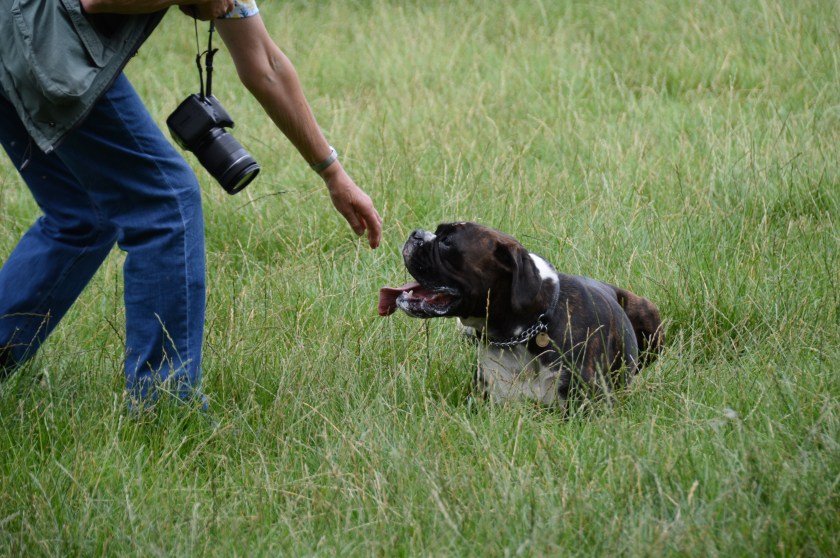
After Mac’s run, it was Aramis’ turn. As I don’t know what I am doing half of the time when I handle sheep and also much rather wanted to take a few pictures of Aramis working, I asked Jackie whether she would like to give Aramis a run. She was more than happy to.
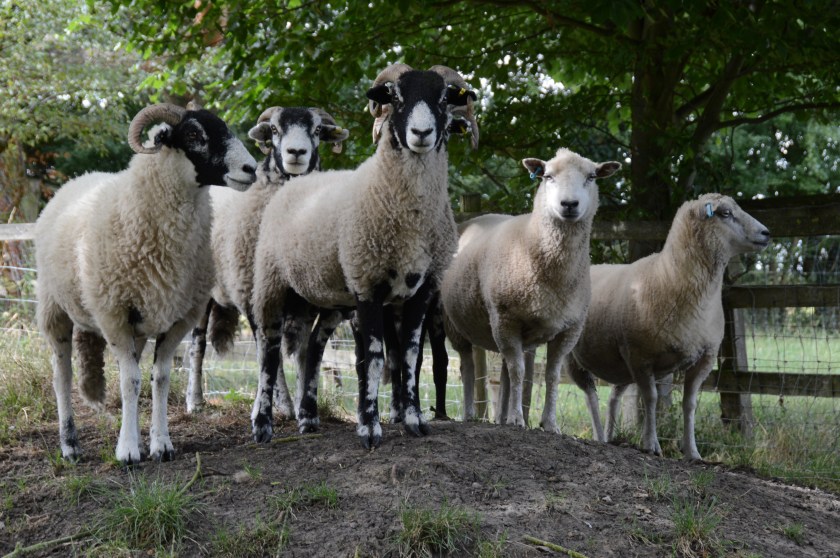
At first, Aramis tried to do what he always does: he tried to outrun Jackie by circling the sheep very quickly. He does this keeping a great distance and always leaves the sheep plenty of room to move. Aramis will push the sheep to wherever he wants them, but I have never seen him trying to pinch them. He is gentle, entirely safe around them and won’t hurt them. When things are not going according to his wishes, he will – in typical Welsh Sheepdog manner – back up before going back in, give the sheep plenty of room to move and puts pressure on them by barking.
Aramis soon discovered that he was dealing with an experienced handler who was familiar with his tricks, so quickly decided to co-operate. He listened attentively to what Jackie told him and it was a pleasure to watch them working together as a team.
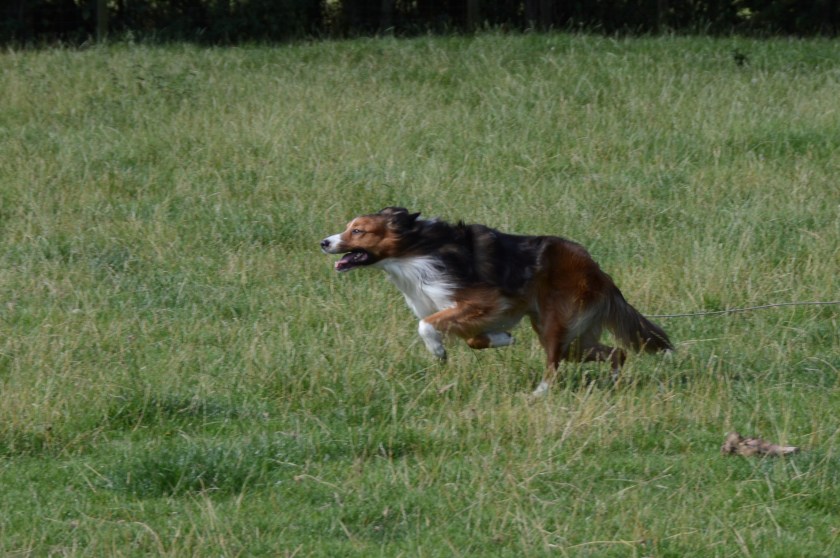
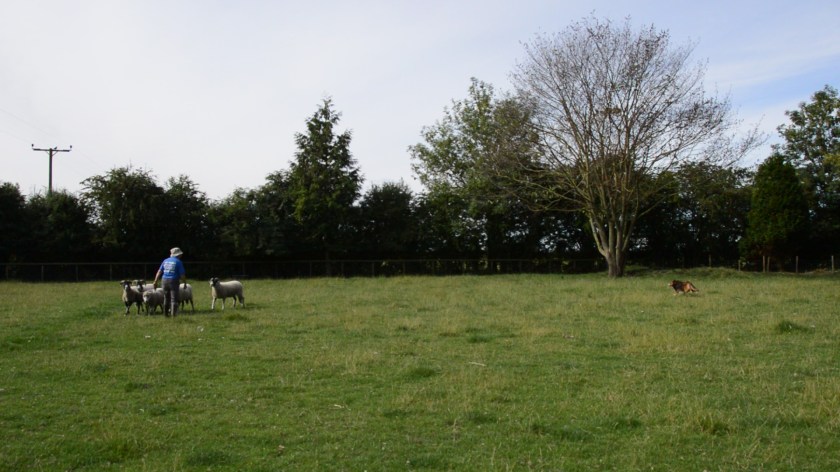
Even the most inexperienced handler could take Aramis for a walk with some sheep. Aramis will always keep them close to the handler and make sure that none of them break away. He does not have a tendency to break the sheep apart when he gets bored, but will keep circling them instead.
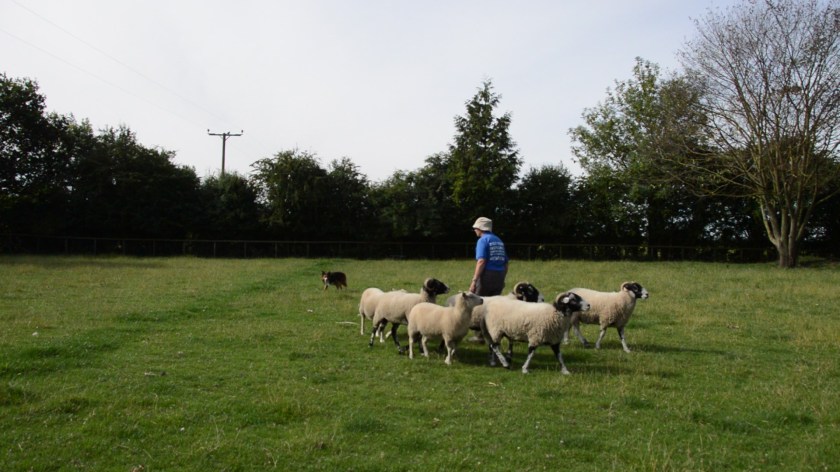
Another reason why I had not wanted to handle Aramis myself was that Bob, Jackie’s partner, had turned up as well. I had absolutely no intention of making a fool of myself in front one, let alone two experts.
Bob’s decision to take a look at Aramis, was quite a compliment: from last night’s conversation I knew that Bob has been working dogs since his early childhood. From Jackie I had learned that, unlike her, he has no interest whatsoever in wasting his time with anything else than the breed he knows, which he has owned all his life and which he is using on a daily basis.
Particularly in the Working Sheepdog world, Aramis’ looks and his affiliation to a somewhat exotic breed are not necessarily seen as an asset. A good working dog does not need to look good, but work well. Preferably, it remains quiet, has a good amount of eye and keeps its tail down at all times. Unfortunately, Welsh Sheepdogs are expected to ignore all of this and do the opposite.
Bob watched Aramis’ efforts in silence. After a few minutes, this old, experienced sheep farmer, who has been very successful in trials and seen a good amount of dogs at work, came over to me and said: ‘That’s a good dog ya’r having there.’
This meant so much more to me than any victory in a beauty contest ever possibly could. Bob was genuinely impressed with Aramis. He liked the fact that he gives the sheep plenty of room, had excellent sheep sense and was truly intent on co-operating with the handler to get the job done.
After a break and a cup of tea, Aramis was to have another go. Jackie felt that I should try, but I still did not want to. So I asked Bob. He was very surprised and certainly had not expected me to ask. Jackie warned me that his handling style was different to hers – harsher and less patient. But as long as Bob would not become too stern with him, I still felt that Aramis would get much more out of it than if I was working him.
Knowing that Aramis was owned by a girl and spent a great deal of his time being a pet, I think Bob tried to be extra gentle with Aramis. At first, he was a bit worried that Aramis would not work for him, but this turned out to be no issue whatsoever. Within just a few seconds, the two of them had found their pace. It was simply magical to watch. Bob’s commands were calm and clear and Aramis was more than happy to follow his instructions. Note how Bob solely relies on his body language and uses neither a rattle bottle, nor a stick to keep Aramis under control.
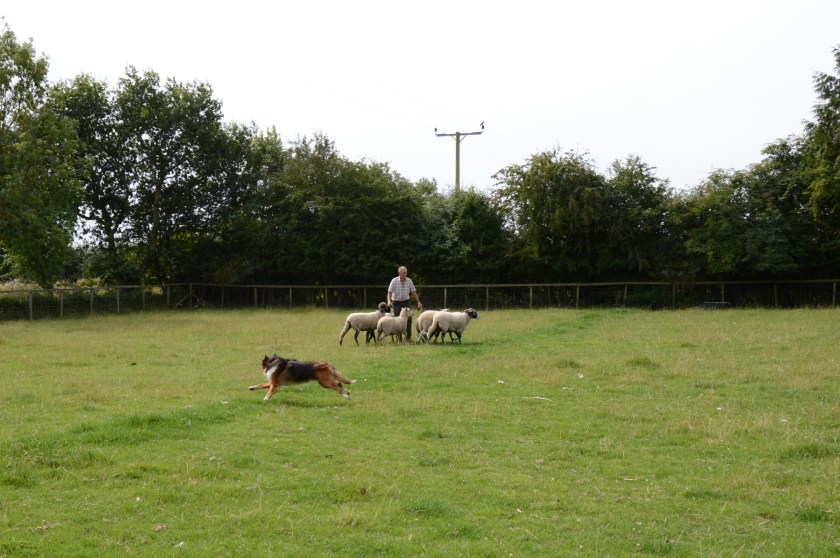
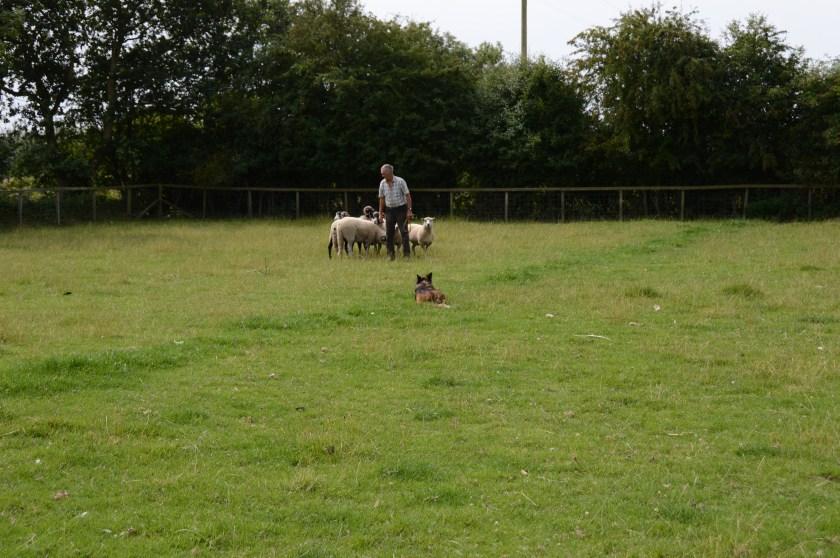
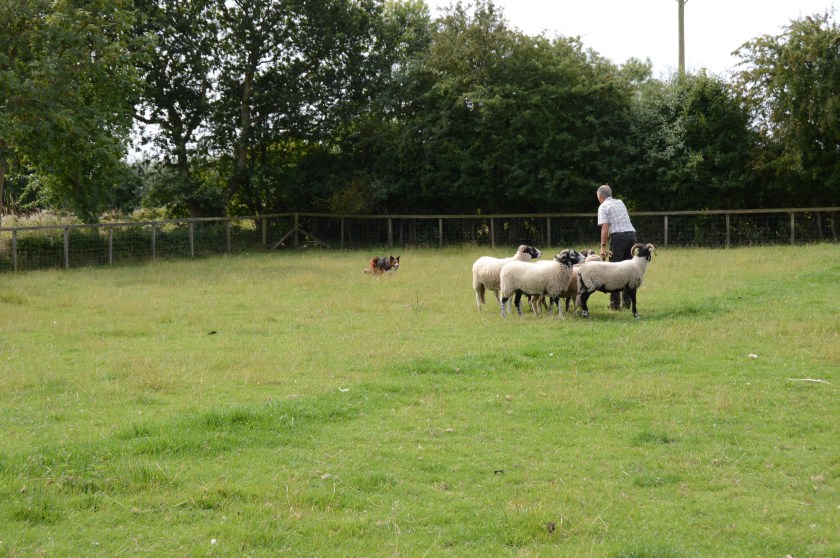
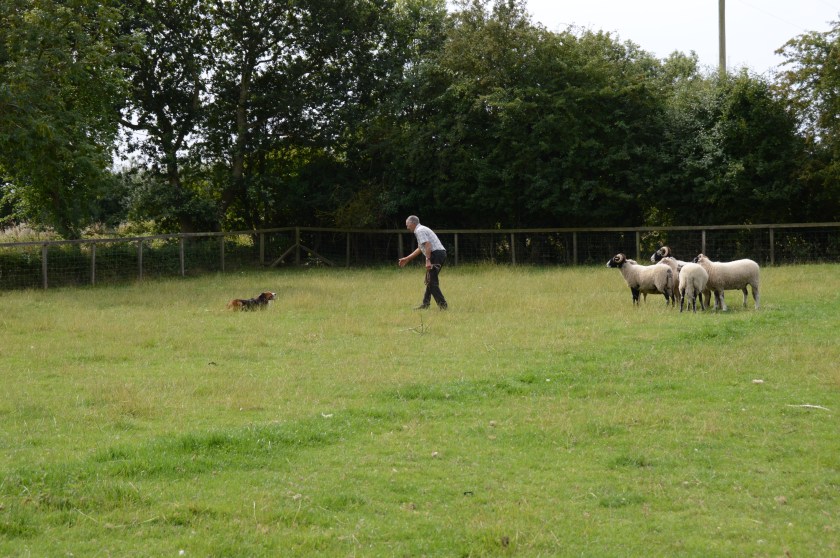
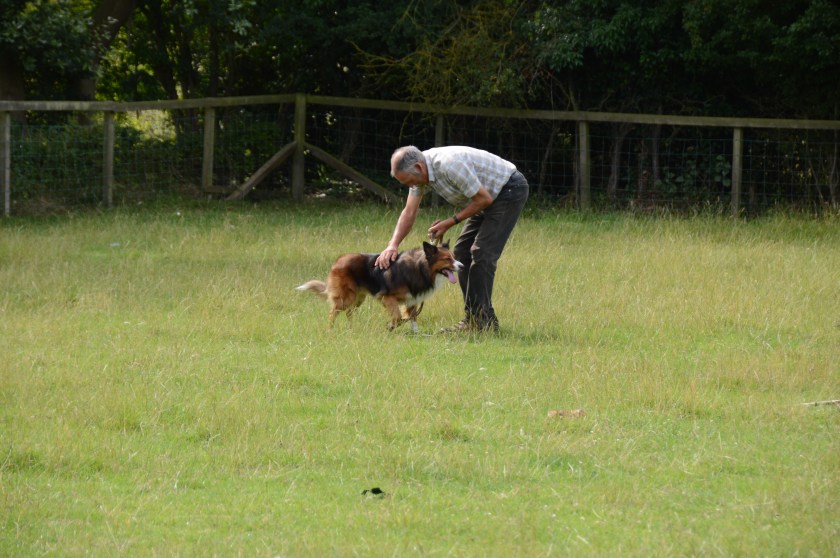
Bob was beaming when he brought Aramis away from the field. ‘If you don’t know what to do with him, you can leave him here!’ he said, and I reckon this is one of the biggest compliments you can get from a handler as a sheepdog.
I am so happy and proud of my boy and it is a shame that I cannot put him to work at home. He does have a fulfilling job and I think he is very happy with it, but herding is obviously what he was bred to do. And he’s damn good at it.
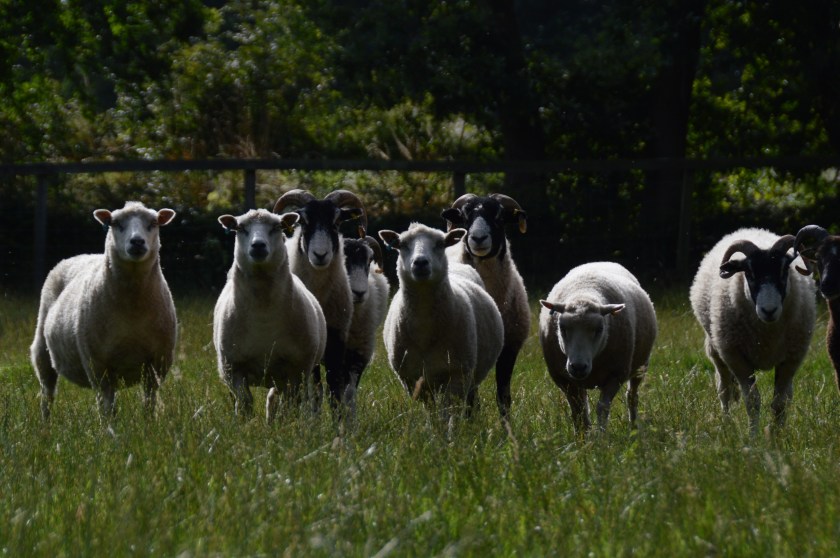
We had another cup of tea and as Jackie and Bob wanted to know more about Aramis’ second career as a search and rescue dog, I showed them some of our training videos.
Then Katie arrived with her rescue collie Nell. I watched her have a go before packing my things.
A little later I said goodbye to Jackie and Bob (and the cup) and drove back to York. I had spent a wonderful two days in the Moors, but had to move on now.
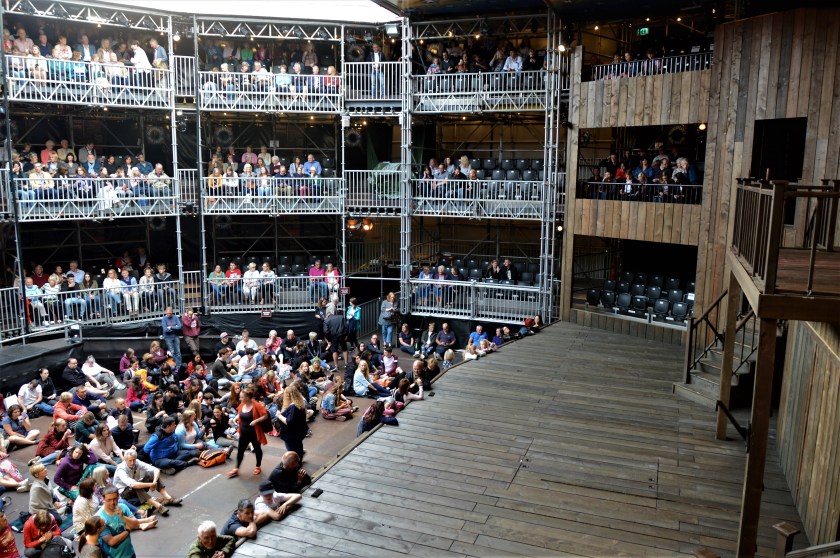
This summer, York has been chosen as the place for ‘Shakespeare’s Rose’, a popup theatre, which looks (almost) like the Globe. A selection of Shakespeare plays is performed twice a day and Linda, Mike and I decided to attend an evening performance of Macbeth.
Before the show we had a nice meal at Sutlers, a venue which was not yet in existence when I still lived in York.


 The Adventures of Aramis