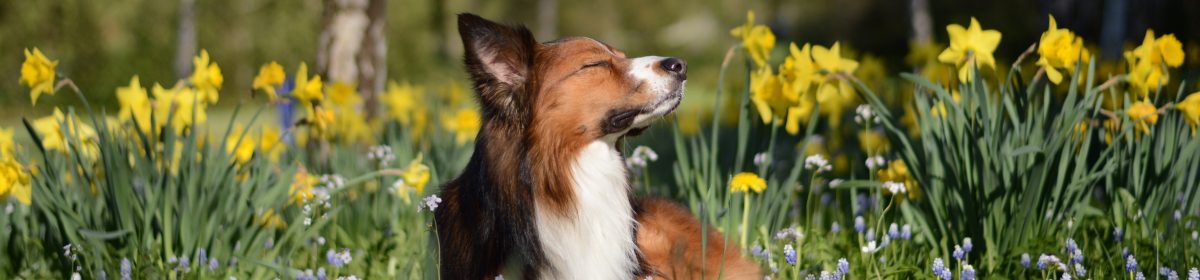
… when you’re busy making other plans!
Aramis had a terrible start to the morning: a bath happened. As a reward, I decided to take him all the way up the river to King’s College and get at least one great shot of Academipup in front of it.
It was a very nice walk, which we both enjoyed a lot. As I wanted to let Aramis run off the lead for a bit, I went a bit further into a field and suddenly spotted another dogwalker with two dogs. I found them particularly noteworthy for two reasons: firstly, they were the only ones walking their dogs off the lead as well, and secondly, their one dog reminded me a lot of that of a Swiss friend’s. Coincidentally, this friend had lived in Cambridge for a while, but had moved a while back. The dogwalker and her four-legged friends took no notice of me and as they disappeared into the distance I couldn’t help thinking that this dog really did look very similar to my friend’s. So I texted them.
I received an answer straight away: she was indeed in Cambridge and yes, she was just out walking the dogs – but how did I know?
I explained and she happily agreed to meet and we took a long, nice walk together. Aramis did not only not mind the other dogs, but actually enjoyed being with them. All of a sudden, the self-restraint and tension he must have felt in the last few days fell off him and he started racing the wind across the field, looking a very, very happy pup. He looked even happier when he found an exquisite pile of cow-dung and decided to personalise it as his new eau de toilette. Needless to say that this was his entry ticket to yet another bath back at the hotel…
(n.b. Aramis’ liking for perfume is more than just a matter of coincidence . When I named him, I only had one of Dumas’ musketeers in mind. Yet only a few days after presenting my dog under his new name – his first name had been Milo – I learned that a) Dumas’ novel, or at least the name Aramis was rather unknown in England, and that b) there had once been an eau de toilette called ‘Aramis’. Now discontinued, it seems to have been particularly popular with working class men.)
On our way back my friend asked me if I would take a picture of them and their dogs in front of this phone booth. Fortunately, they were more than happy to return the favour, and here is the result:
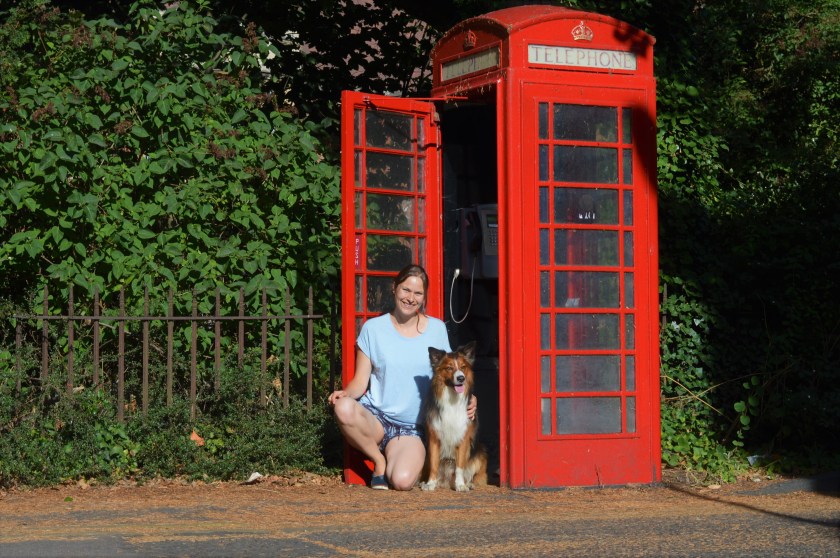
There may never be a picture of Aramis in front of King’s College, but the wonderful surprise of unexpectedly meeting a great friend makes more than up for it!
After treating Aramis to another bath I made my way to the Fitzwilliam Museum. And who should I accidentally bump into? My friend whom I had met earlier in the morning, of course! She was en route to the Museum of Zoology with her children and for a short moment I considered joining them, but then decided against it.
A word of warning: if you do not like art, or dogs, or both, what follows is not for you.
On my way to the Fitz, I walked past the Scott Polar Research Institute, which is a centre for the research of the Arctic and the Antarctic. Outside, you can find this monument to the innumerable sled dogs which made early polar expeditions possible.
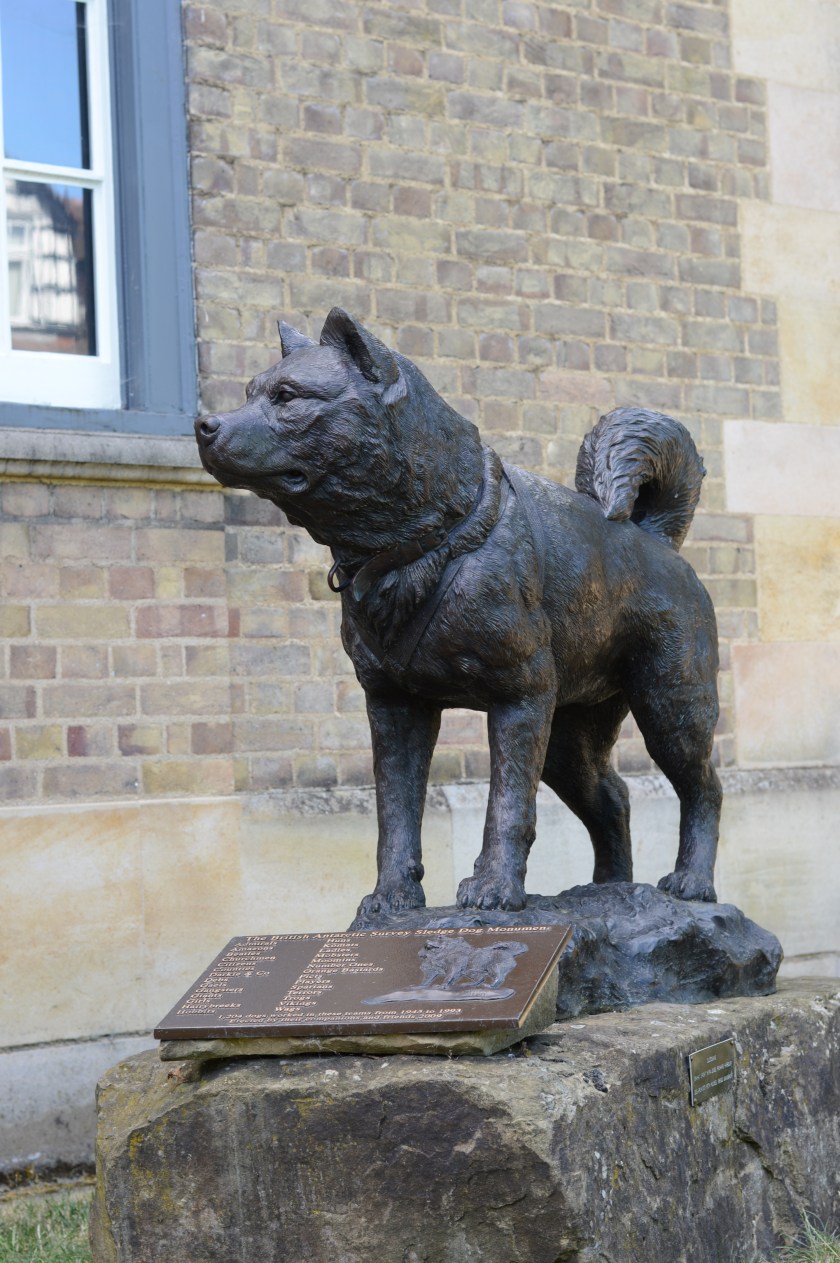
The dogs used by both Amundsen and Scott were imported from Siberia and then shipped to the South Pole via New Zealand. Out of the 52 dogs Amundsen took with him on his expedition to the pole, only 11 survived. It had been part of his plan from the start to use some of the weaker dogs as fresh meat both for his men and the other dogs.
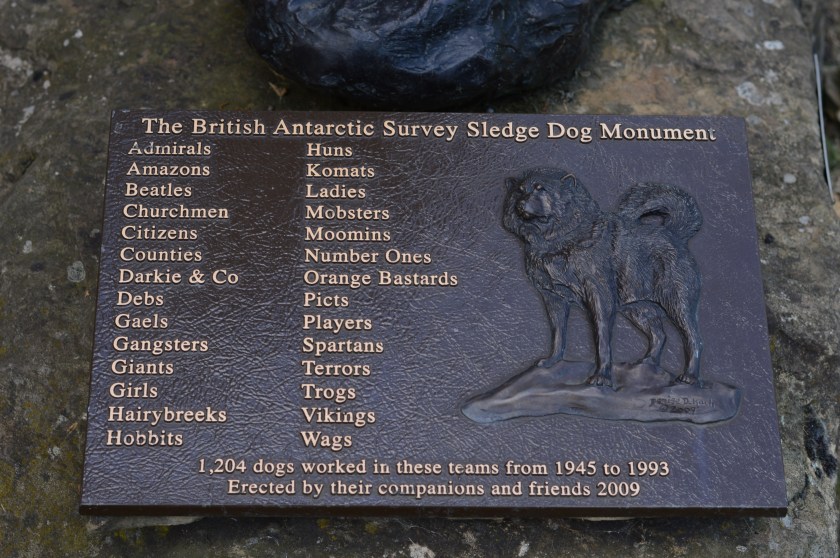
I cannot stop wondering what some of these teams looked like and how many of these 1204 dogs survived the expeditions they were such a significant part of. I believe that despite the fact that the dogs were often used as a food source, a deep emotional connection could still develop between the handlers and the dogs in the course of their journey together.
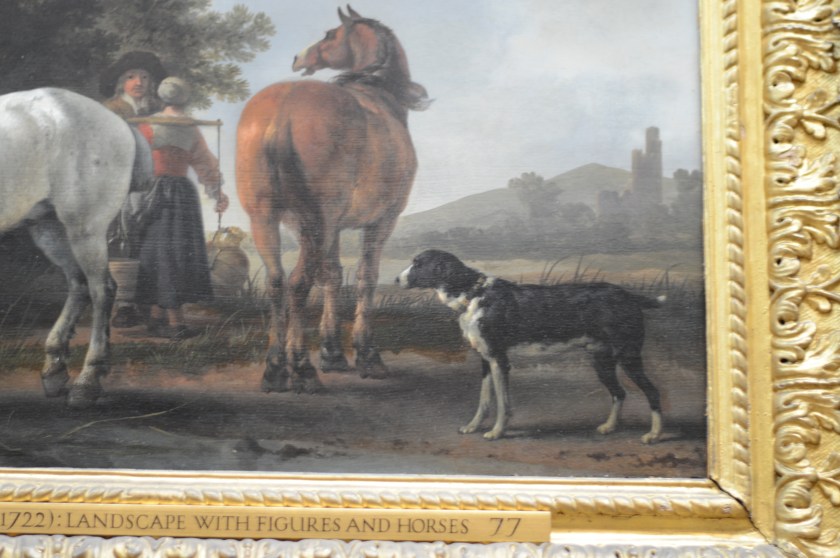
Unsurprisingly, I am drawn to representations of dogs in art. So, at the Fitzgerald Museum, I spent quite some time pondering about the dog you see below. From a contemporary perspective, it is a mutt. The subject of the painting and the people portrayed with it suggest that we are looking at a farm dog. What I find particularly noteworthy here are dog’s cropped tail and the fact that he is wearing a collar: both may be a hint that he has an owner who looks after him. Historically, dogs’s tails were docked for a variety of reasons. It was believed, for example, that tail docking would prevent rabies and prevent more serious injuries when hunting or fighting.
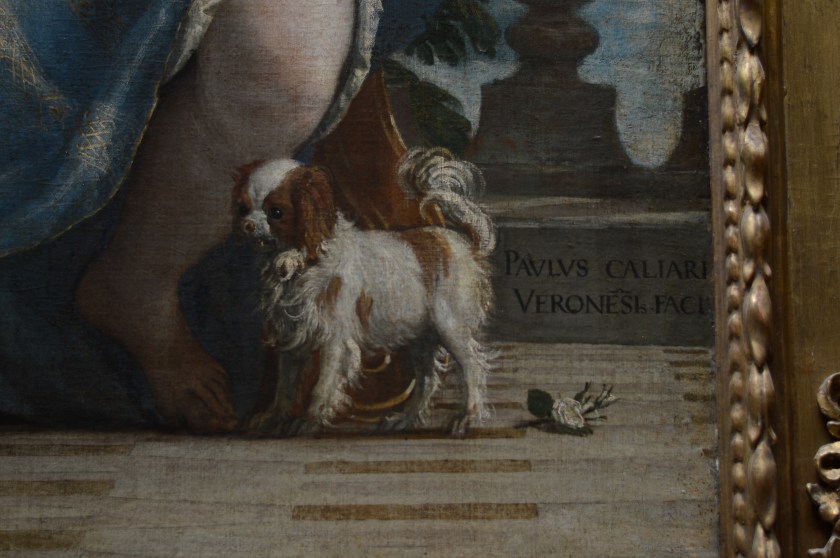
More often than not, dogs only occupy a marginal space in paintings and yet, they are omnipresent. They often appear as a side note, an afterthought, something to fill and animate an otherwise empty corner, but this is precisely what triggers my interest. It is here that the painter has some artistic freedom and decides to fill it with another animal that – at least in this painting – does not even seem to be worth mentioning. The piece is called ‘Landscape with Figures and Horses’ and even though the human ‘Figures’ occupy the centre space, they are still put in the background by the horses. The dog, despite occupying the right hand corner, is the creature closest to the viewer and seems to stand entirely in the sunlight, unlike everyone else in the picture. Even though he is impossible to oversee, he appears to be too insignificant to be mentioned in the title.
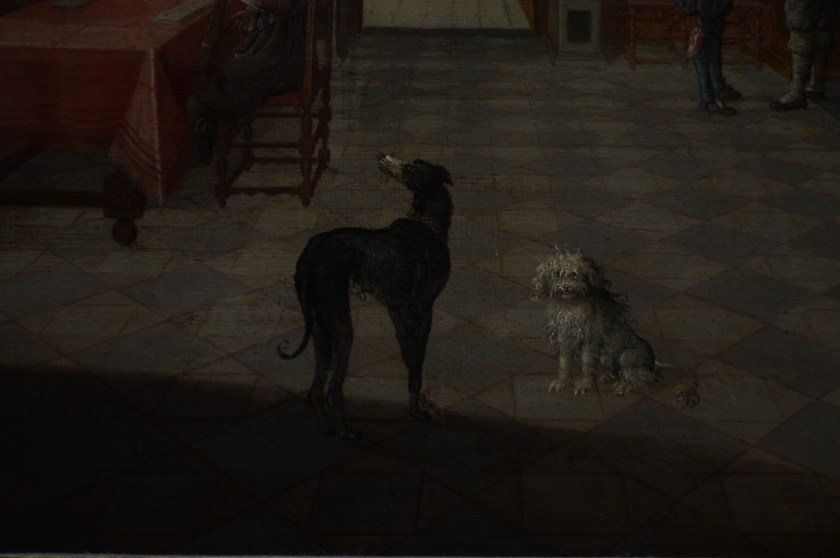
These two dogs, one of them a sort of slightly wirehaired greyhound, the other a poodle type, occupy the middle ground of a painting by Nicolaes de Gyselaer entitled ‘Interior of a Hall with Musicians at a table’ and dates from 1621.
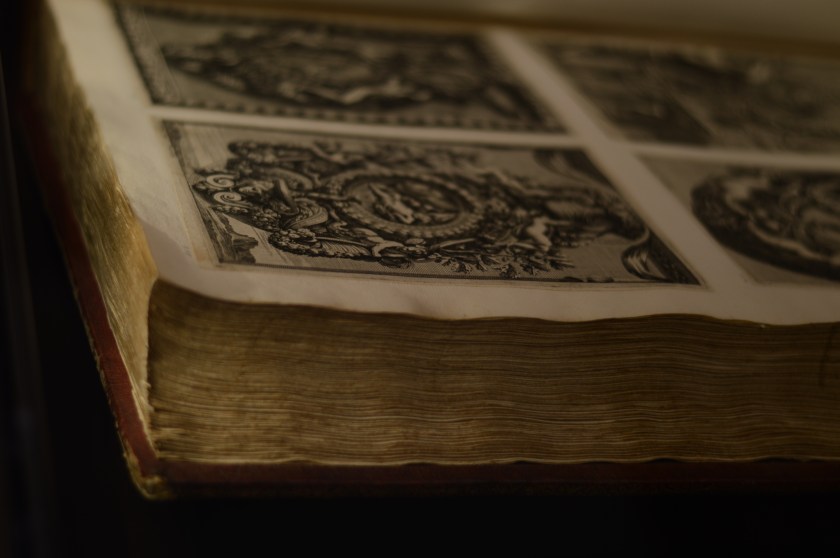
This is from an enormous volume of 17th century prints. I would love to own a book like this!

After buying a book called ‘Women who Read are Dangerous’ in the Museum shop, I left the Fitzwilliam Museum and took another stroll around town.
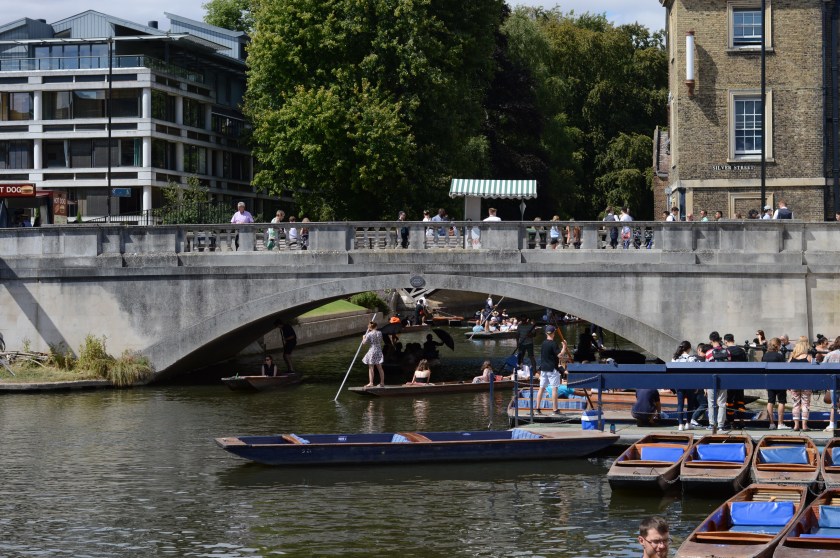
The heatwave is ongoing and temperatures almost reached 30°C today. Everybody was gathering alongside the river in the hope of finding a little relief from the heat there.

When I got back to the hotel, Aramis looked as if he had gone to sleep the moment I had closed the door behind him this morning and not moved since. We went for a short evening walk, as temperatures were still very high. I think Aramis was very happy to get back to the nice, cool hotel room.
 The Adventures of Aramis